For 70 years consultancy has, by-and-large, remained unchanged. But that is changing, and the pace at which the change happens is about to accelerate. All consultancies need to be planning with this shift, and have those plans delivered by 2027.
The destination is clear, and the technology now makes it a mainstream reality within reach by 2027. Getting there is a journey — one some firms have already started — but the direction is not in doubt.
Here is why I believe that to be the reality for all firms today.
Earlier this year PwC launched PwC One: a platform clients can log into directly, describe a problem, and have AI agents carry out the work — with PwC professionals reviewing in the background, and for some steps no person in the loop at all. It is a self-service front door to the firm, priced on subscription and consumption rather than billed hours, and built to move clients beyond episodic projects towards continuous insight.
PwC will not be alone. Expect more examples of this model in the next 12 months — from established firms with the balance sheets to build them, from AI-native challenger consultancies built this way from the start, and boutique firms who quickly grasp the direction of travel in the market.
But the platforms we will see emerging are the visible tip of something much larger. The real questions sit underneath it: what is forcing this, and what it does to the shape of the firm.
Quality Decisions at Machine Speed
Start with what AI actually changes: not just the speed of work, but what is scarce within it.
When anyone with a large language model can produce a decision in seconds, decisions stop being the bottleneck. Making one is now cheap, fast, and available to everyone. What becomes scarce — and what actually determines positive business outcomes — is the quality of those decisions.
And here the problem sharpens. A decision can now be made and acted on faster than human governance can review it. Execution has moved to machine speed; the organisational judgement meant to keep it sound has not kept up. Bad decisions can now be implemented quickly, as well as good ones. That gap — between how fast a decision can be implemented and how fast it can be properly governed — is where risk now accumulates.
This is precisely the ground consultancies have always been leant on to hold by their clients: decision quality, judgement, governance — helping organisations make the right calls, not just quick ones. It has always been the expensive, senior, hard-to-reach part of what a firm sells. That value has not diminished; in an accelerated world it matters more. What cannot survive is the way it has been delivered. Governance at human pace is now the constraint. It must operate at the speed of AI, not the speed of a review cycle.
No amount of individual productivity fixes this. A faster consultant is not a scalable consultancy — a quicker reviewer still reviews one decision at a time while the machines make thousands.
Delivering judgement at machine speed is not something a person can do by hand. It is something only a system can do — and not the raw, ungoverned kind that produced the flood of quick decisions (and potential hallucinations) in the first place, but a system that carries the firm’s own structured expertise and governance inside it. Building that system means the firm itself must change its shape from a people heavy model to something new.
The Firm Changes Shape
It is tempting to read that as the obituary of the consultant: advice automated, expertise commoditised, people replaced by machines. That reading mistakes the surface for the substance. Consultancy is not being replaced. Its shape is.
For its entire 70+ years history, a consultancy has been a labour business. It grows by hiring. It scales cost as it scales value. Its worth is tied to the size and utilisation of its bench — juniors under seniors, billed by the hour. That is the shape of the old model, and it is now the thing holding it back. A bench cannot govern decisions at machine speed; it can only add more people, more slowly, at more cost.
So, the value moves — away from the people on the payroll, and into the asset they build: the firm’s own structured, ever-improving IP, the system that can actually deliver judgement at the pace decisions are made. This is the same force already repricing the industry. Firms whose value compounds in systems and IP are worth more than firms whose value can only grow by adding heads, because only the first kind can keep up — in the second, the firm’s value walks out of the door with the consultant.
This is the real transformation. Not the consulting pyramid collapsing, but the pyramid being replaced. The old pyramid scaled people; the new structure scales systemised logic, IP, and outcomes. The firm stops selling time and starts delivering capability as an asset — expertise that produces outcomes through systems and people, in whatever combination each client needs.
An asset, not a payroll. That is the shift.
One Firm, the Full Spectrum
Once the firm’s expertise lives in the asset, how it serves a client becomes a choice rather than a constraint.
Picture a spectrum. At one end, fully automated advisory — the client works directly with the system. At the other, high-touch strategy — senior people in the room, deep context, relationships carrying the engagement. The old firm could only ever operate at the human end, because people were the only delivery mechanism it had. The systemised firm can operate anywhere along that line, and move freely across it.
Concretely: a client might run the firm’s diagnostic themselves, on subscription, and act on most of it unaided — then pull a partner in for the one board-level decision where the stakes and the ambiguity justify it. Same firm, same IP underneath, two very different modes within a single relationship. The spectrum is not a position the firm picks once. It is a dial it turns — per client, per moment — all powered by the same asset.
Picture it from the client’s side, a few years out. The firm’s system is already embedded in a regional insurer — quietly ingesting the KPIs that matter, because it helped run the transformation that defined them, and it understands which outcomes the business is actually chasing.
One Tuesday, no one goes looking for a problem. The system notices first: a handful of indicators in one region are drifting the wrong way. Because it holds the insurer’s capability data as well as its numbers, it doesn’t just raise an alarm — it flags to both the client and the firm what appears to be driving the drift, and what might need to be done. In parallel, it has been quietly sending pulse questions to stakeholders at agreed intervals, testing whether the new capabilities are embedding or whether adoption is slipping — so perception and symptom are already on the table, not waiting to be discovered.
The operations director acts on most of it herself, straight from the system. But one call — whether to restructure the regional team — carries too much weight and too little certainty to make from a dashboard. So she books ninety minutes with the partner who knows her business, who arrives already briefed by the same system, and they spend the whole session on the judgement, not the analysis. The system watched, diagnosed, and prompted; the human decided. That is the dial.
What makes the dial possible is one thing running its whole length: systemisation.
A self-serve product is systemised expertise the client operates themselves. A high-touch engagement is the same systemised expertise operated by a consultant on the client’s behalf. Underneath both sits a single structure — a client product, a consultant playbook, and a data structure at once. One system, three layers. The interface changes across the spectrum; the engine does not.
This is what keeps self-serve as genuine advisory rather than just a smarter tool. The client is not left to make their own calls with a chatbot; they are operating the firm’s governed judgement, running on their own data, with the firm’s decision logic doing the governing by construction. That is also what “embedded” really means. The more a client’s data flows through the system, the more it becomes theirs specifically — and the harder it becomes to unplug.
Even the high-touch end changes. Human work no longer carries the whole engagement; it sits on top of the system, concentrated where judgement, context, and trust decide the outcome. There is less of it, and each hour of it is worth more — a smaller tip on a larger base. That is not a softening of the shift; it is the shift. The firm needs fewer senior hours, and the ones it needs matter more.
Why It Compounds
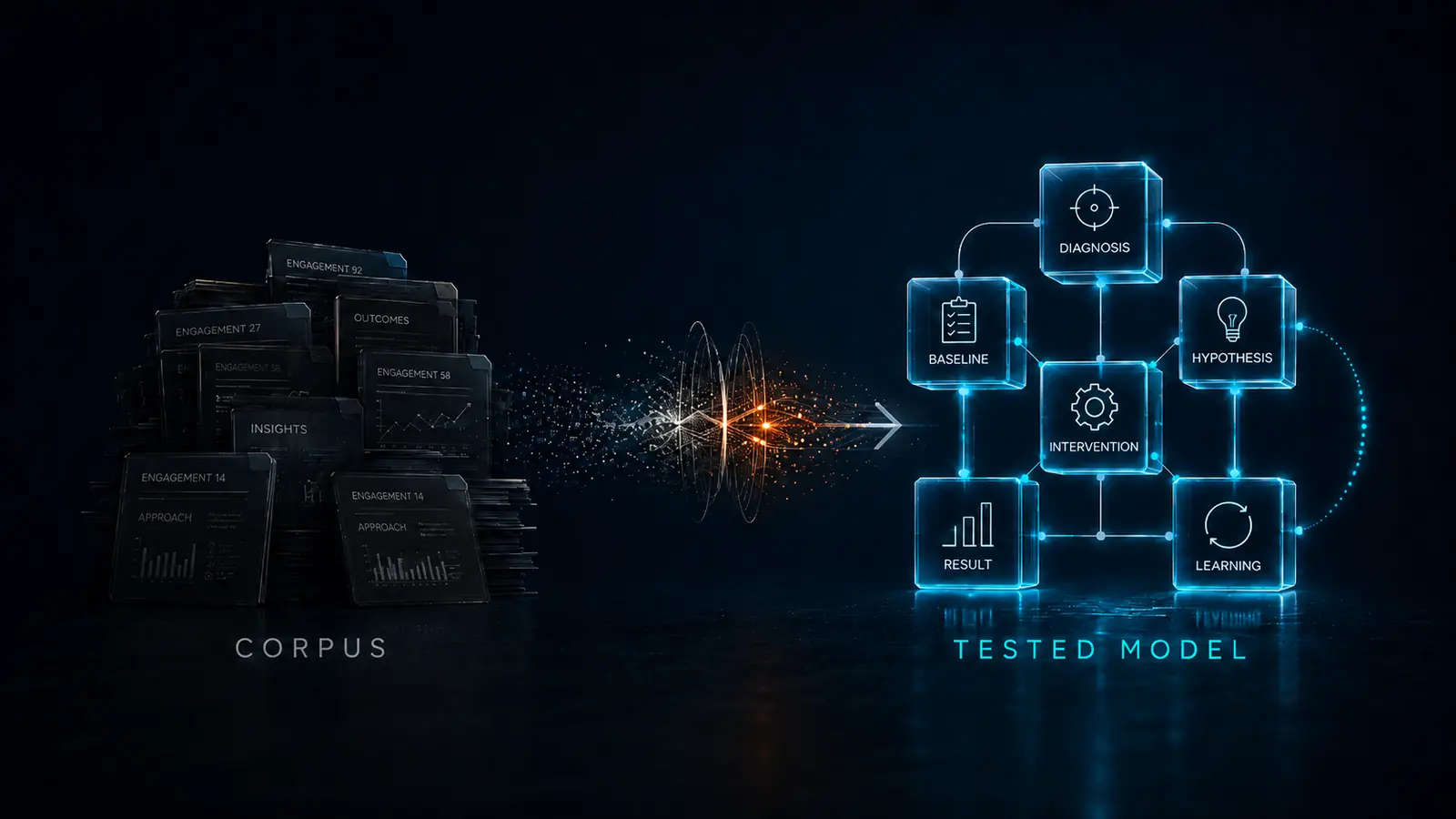
That engine does more than run the spectrum; it improves itself. This is the real distinction at the top of the maturity ladder — and it is what makes Consultancy-as-a-System the fifth and final level, L5, the destination the earlier stages have been climbing towards. A Consulting Operating System, at L4, makes delivery consistent and scalable. Consultancy-as-a-System, at L5, makes it compound. Every engagement feeds the next — outcomes become evidence, evidence sharpens the pathways, sharper pathways produce better outcomes — across every client at once.
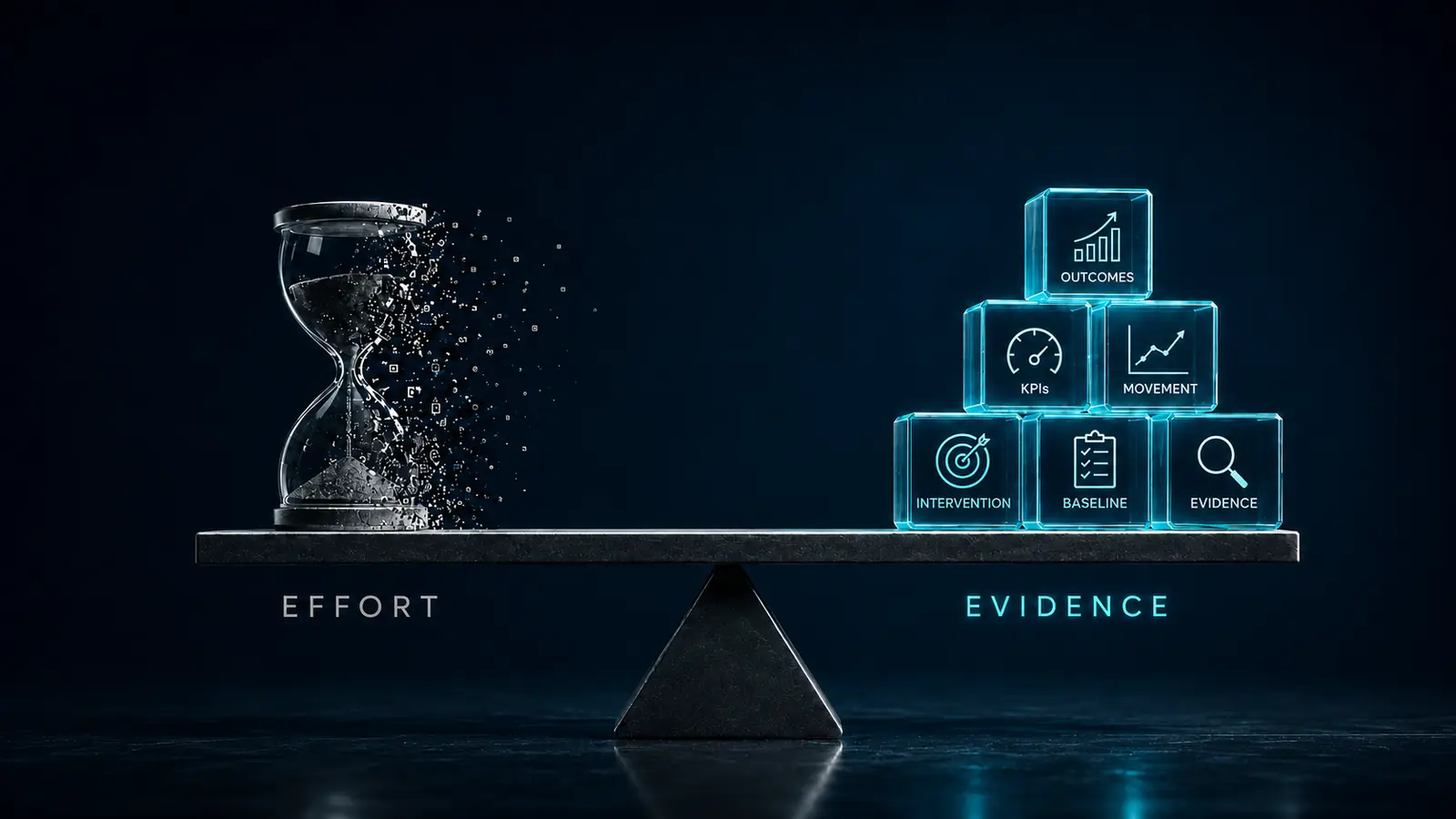
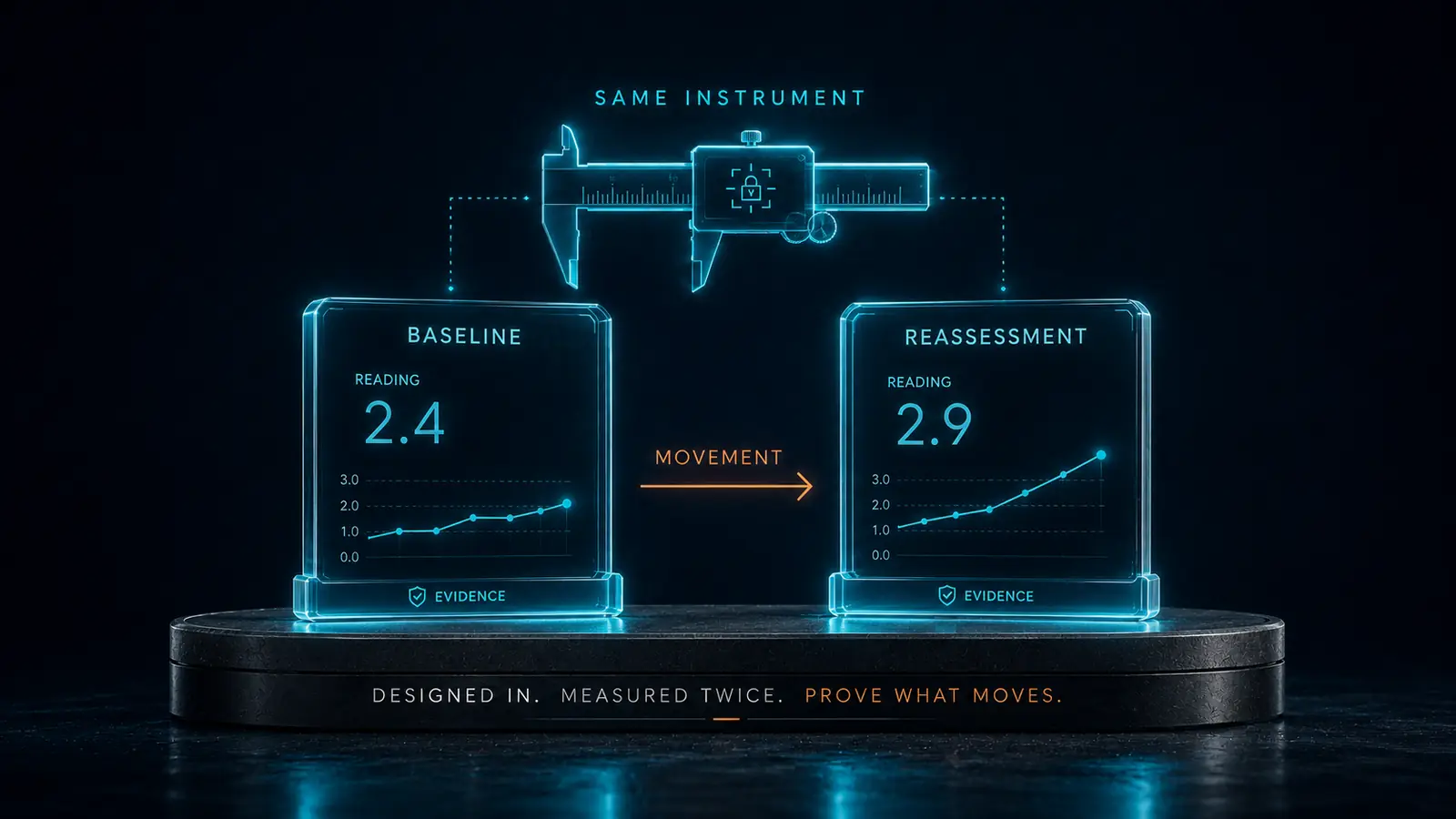
The mechanism that makes this fully possible is a model that I call the Atomic Model: actions linked to the capabilities they change, capabilities linked to the outcomes they drive, evidence and measurement built in at the foundation rather than bolted on afterwards. That is what lets the system see which moves actually produced results — in evidence, not opinion — and improve on that basis. Each engagement makes the structure richer: a flywheel a generic model cannot replicate, because the advantage is not the AI but the structured expertise the AI runs on.
Which is the whole point. AI does not solve the problem; it amplifies the model. If the model is flawed, AI scales the flaw. If the model is structured, AI scales the value. The firms that win will not be those with the best tools, but those whose model was worth amplifying.
There is a second dividend in seeing every engagement at once. A firm operating this way can tell each client not only what to do, but how they compare — where they sit against the patterns drawn, in aggregate and anonymised, from the whole portfolio. And the portfolio can be managed globally: identifying patterns and new opportunities to engage, and to build new products that address the pain points clients are experiencing. That is benchmarking and insight no single engagement can produce, and no client can generate alone — and it sharpens with every firm and every outcome the system takes on. The more the firm runs, the more valuable each client’s view of the field becomes.
What the Firm Actually Does
This changes what the firm does, at every level.
For the people running it, the job moves from managing bodies to managing systems and market insight. Leaders spend their time improving the firm’s IP and reading where the market is going, not staffing benches and chasing utilisation. Because the system holds the whole portfolio, they can see across every client at once — where clients are heading in the right direction, where they need intervention, and where common problems recur across the portfolio — and direct scarce human attention to where it matters, at the moment it matters, instead of spreading it thinly across everything.
For the consultant, the work changes character. Much of it comes to resemble customer success in SaaS: guiding clients through an engagement that runs continuously rather than delivering a report and leaving. Much of the rest is research and product management — improving the models, sharpening the pathways, extending the IP. And the human core concentrates on what genuinely does not encode: the hard judgement calls, the accountability a client needs a name and a face behind, the reading of a room, the challenge that reframes the problem. You do not systemise the expert; you systemise everything around them, so their judgement scales instead of bottlenecking.
The Commercial Model Follows
When a firm operates this way, the commercial model follows on its own. Value is created continuously, so engagement becomes continuous — and subscription, recurring revenue, and long-term partnership follow naturally. PwC moving away from billed hours is an early signal of exactly this, but they of course are not alone and are just one example to point at.
But that is the consequence, not the goal — and the order matters. The L3 trap holds at the top of the ladder as firmly as at the bottom: reaching for the commercial model before the system can sustain it is risk transfer in the wrong direction. Pricing follows structure; it does not lead it. Only at the top has the structure finally earned the model.
The Destination
The hardest part of this shift is not technical. It is that a consultancy is built, top to bottom, to reward exactly what it now has to give up. Partners are paid for how large a team they run and how fully it is booked; the economics depend on billing a lot of junior time beneath a little senior time. An asset that solves a problem once and hands the client the means to reuse it earns none of that. The people who would have to lead the change are paid to grow the thing it replaces. That, far more than the technology, is why most firms will move slowly — and why the ones that move first will have room to define what comes next.
None of this arrives fully formed, and it would be naïve to pretend otherwise. The direction is settled; the path is not. What has to change is not only technology but adoption, business models, and acceptance — on both sides of the table. As with every wave before it, there will be early adopters and innovators, on the consultancy side and the client side, moving well ahead of the mainstream, and there will be real complexity to work through on the way.
But two things make this different from earlier shifts. The direction is not in question — only who moves first and how fast. And the pace AI sets means this cycle will be measured in months, not years. It is already underway. The larger firms are moving. New entrants are being built this way from the start. By 2027, the firms that thrive will not necessarily be the ones that have finished — but they will be the ones that have taken a conscious position, rather than being blindsided by a market that reshaped around them.
And where it all leads is bigger than any single firm. The expensive, senior judgement that firms have always rationed by the hour becomes something a system can deliver continuously, to anyone who subscribes. Quietly, that is a democratisation of expert advisory — the scarce and elite made accessible, continuous, and embedded in how organisations decide.
The firms that see it early will not simply adapt to that world. They will build it — not by selling people by the hour, but by delivering outcomes through systems and people, flexing between the two as each client needs, on IP that gets stronger with every engagement.
That is Consultancy-as-a-System.
The direction is inevitable. The only real question left is how a firm starts, and where — what the first move is, and the one after that. That is the subject of the final piece in this series.