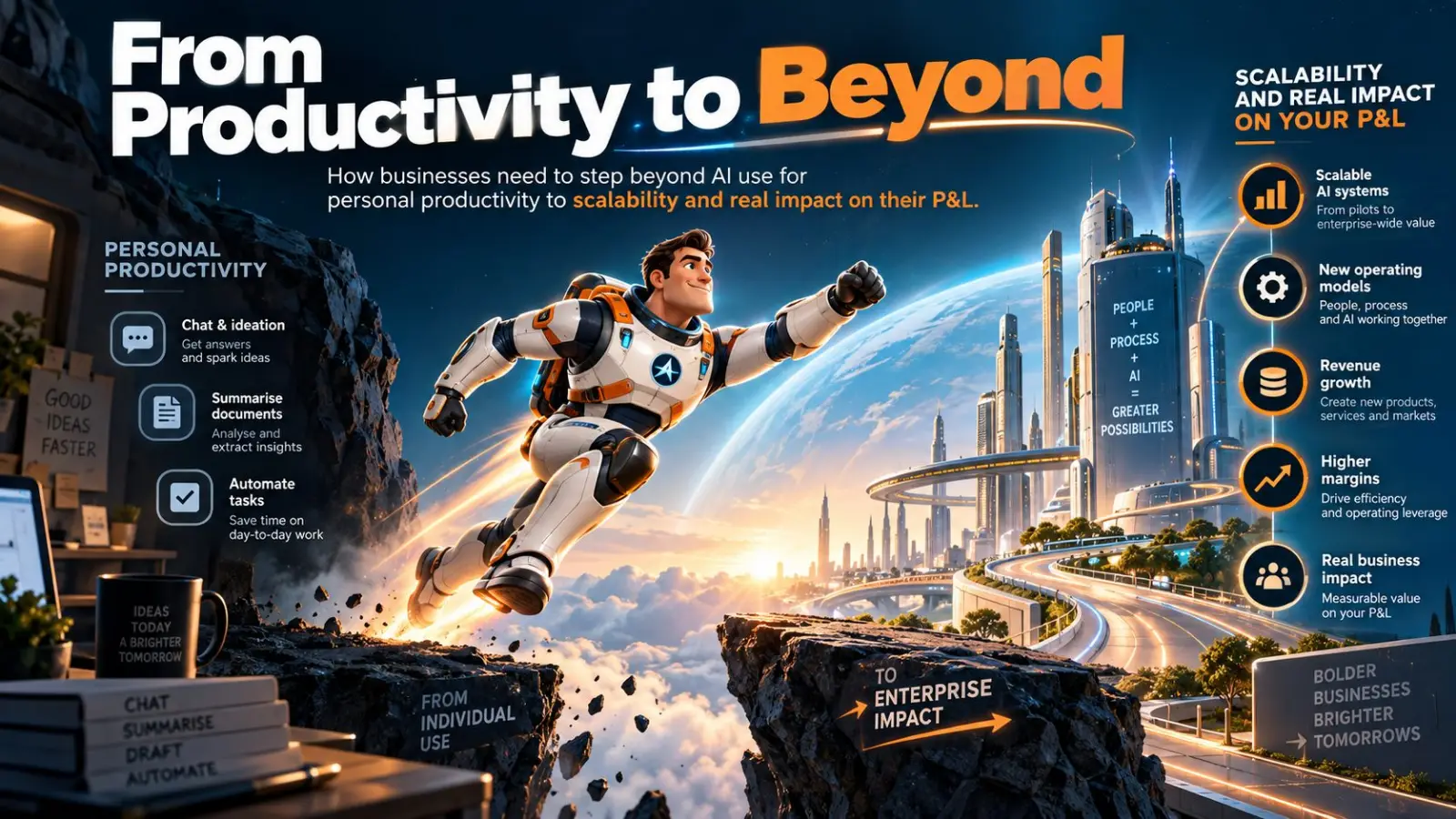
For most of its history, consulting has sold three things: expertise, time, and the synthesis of both into deliverables. Clients paid for access to people who knew something they did not, and for the hours those people spent turning that knowledge into a report, a recommendation, or a roadmap. The economics rested on one quiet assumption: that synthesising information into useful advice was a scarce, labour-intensive activity. AI is dismantling that assumption.
Large language models can now draft sector analyses in minutes, summarise hundreds of pages of research in seconds, benchmark practices across industries, and generate the kind of output that used to anchor a six-figure engagement. The “advice” layer of consulting is being compressed. This does not mean consulting disappears, but the way it is priced, packaged, and delivered is being redefined from the ground up.
Knowledge Is No Longer the Moat
The traditional consulting value proposition leaned heavily on information asymmetry. A Big-Four partner brought insights, frameworks, and cross-industry exposure that the client could not easily assemble internally. That asymmetry is thinning. Models trained on public and licensed data can now reproduce generic industry benchmarks, summarise best practice, and surface relevant frameworks on demand. What used to be a three-week discovery phase now happens in an afternoon.
The implication is blunt: if an engagement can be replicated by a well-prompted model, it should not be priced as bespoke consulting. Firms that keep selling generic advice at premium rates will find themselves squeezed: by in-house teams using AI directly, by cheaper boutiques, and eventually by the tools themselves. The economic floor is rising faster than most partners realise.
Outputs Are Cheap. Outcomes Are Not.
The logical consequence of cheap synthesis is that the deliverable itself (the deck, the report, the recommendation) loses its premium. Clients are beginning to notice they can generate a comparable first draft internally for a fraction of the cost. The moment a CEO prompts a model and gets something that looks like a consulting report, the willingness to pay £200,000 for one evaporates.
What does not commoditise is the actual change a client needs to produce in their business: measurable capability improvement, adoption of new ways of working, movement on strategic KPIs, real reduction in cost or growth in revenue. These outcomes require judgement, sequencing, stakeholder navigation, accountability, and sustained measurement. AI can accelerate the work, but it cannot own the outcome. That is where the new economic value concentrates.
From Hours Billed to Outcomes Delivered
The old commercial model (day rates, staffing pyramids, leverage ratios) was engineered for a world where producing analysis was expensive. When a junior consultant could fill forty hours a week running interviews and building slides, the pyramid worked. AI collapses the junior layer. A senior with the right tools now produces more, faster, with less support. The economic logic of selling large teams at blended rates is breaking down.
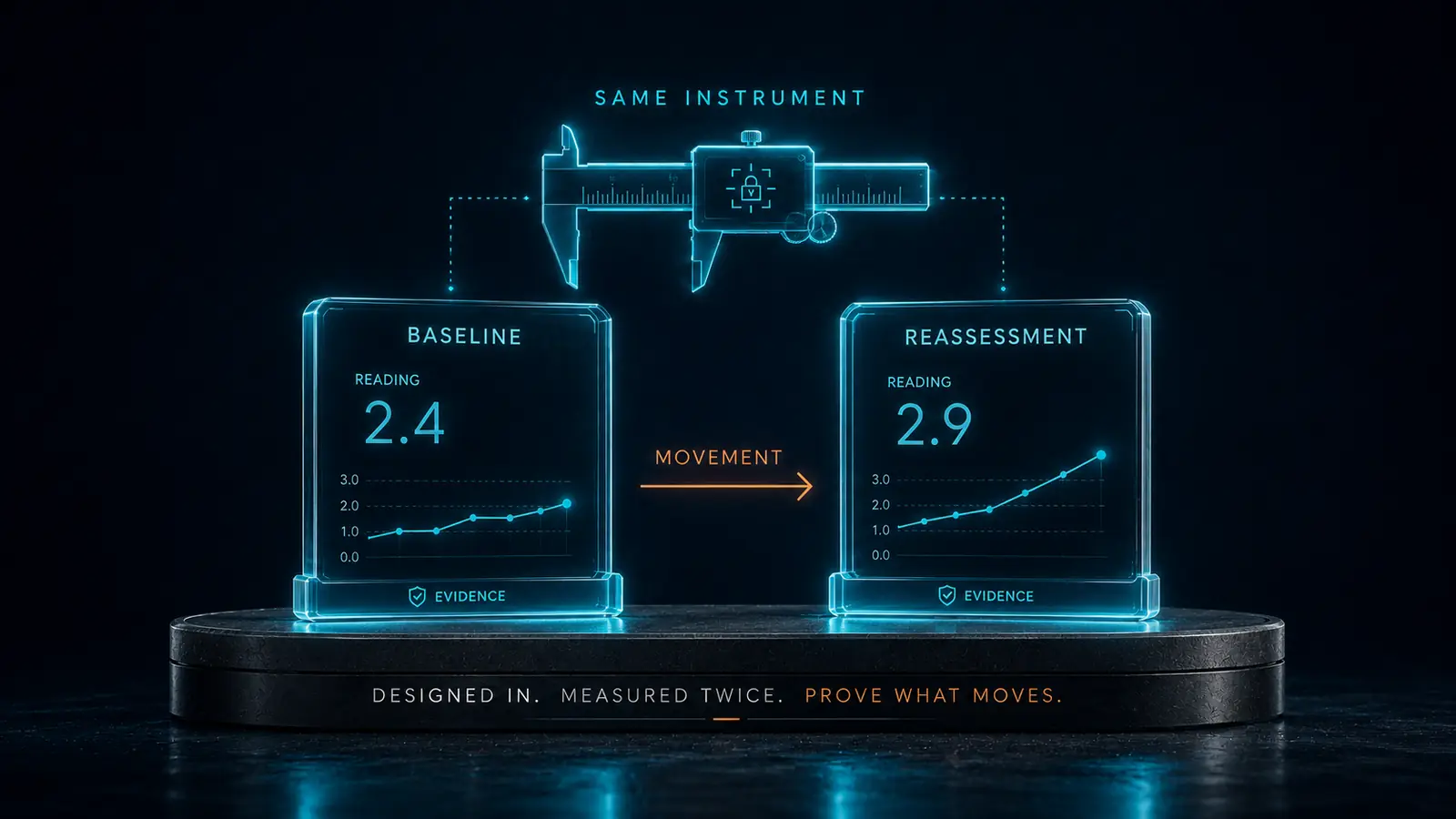
What replaces it is outcome-led pricing. Instead of billing for effort, consultancies increasingly price against measurable client progress: capability scores moving, benchmarks improving, value being tracked against defined KPIs. This is harder to sell, but far more defensible. When the client can see objective improvement, the conversation about fees shifts from “how many days?” to “what progress are we making?”. The value basis changes, and with it the whole pricing surface.
Productisation Becomes a Commercial Necessity
If outputs are cheap and outcomes are what clients will pay for, then consultancies need a repeatable way to produce those outcomes. That means codifying expertise into structured consulting products: diagnostics, maturity models, benchmarks, improvement programmes, and engagement frameworks that can be delivered consistently and measured objectively. AI makes this not only possible but economically compelling: the marginal cost of delivering a structured product to an additional client is a fraction of delivering a bespoke project.
Productisation also shifts the unit economics. A consultancy with ten productised diagnostics and twenty client capability programmes has a fundamentally different business from one selling fifty bespoke projects. Revenue becomes more predictable, gross margin improves, and scale no longer requires linear hiring. The firms moving decisively toward this model are already pulling ahead.
The Rise of Recurring Advisory
The final economic shift is from episodic to continuous. Project consulting generates revenue in bursts: win a proposal, deliver, move on. AI-enabled consulting, built on structured products and measurable outcomes, lends itself to ongoing relationships. Clients want continuous diagnostics, continuous benchmarking, continuous advisory access. They do not want to re-procure a new project every time their maturity needs reassessing.
Recurring revenue models fundamentally change the financial profile of a consultancy. Lifetime client value increases, pipeline pressure decreases, and the business earns the kind of multiple investors typically reserve for SaaS. This is not a marginal improvement. It is a different category of firm.
The Bottom Line
AI does not end consulting. It ends a specific commercial model of consulting: the one built on synthesising information, billing hours, and charging for deliverables. What replaces it is a model organised around structured IP, measurable client outcomes, and continuous advisory relationships. For consultancies willing to rebuild their operating model around these new economics, the opportunity is larger than anything the industry has seen in a generation. For those who cling to day rates and bespoke decks, the pressure is only going to compound.
Structured IP
Codify frameworks, diagnostics, and maturity models into repeatable, AI-enabled products.
Outcome-Led Pricing
Move beyond hours and deliverables. Price against measurable client progress.
Recurring Advisory
Turn episodic projects into continuous relationships with predictable revenue.